
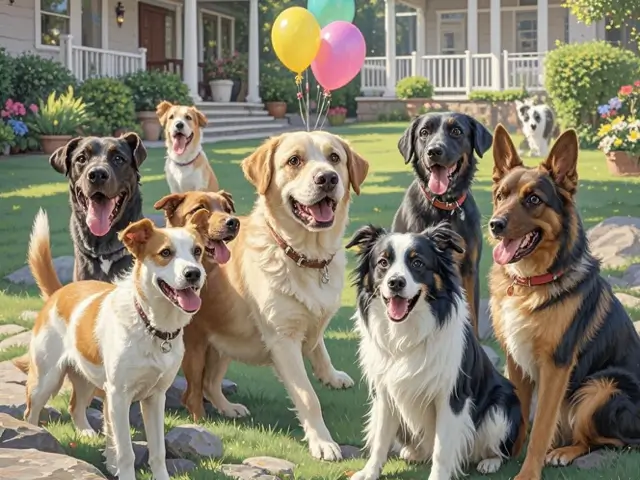
Are you also planning to get a lovely dog to share your joys and sorrows? Maybe you’re tangled with many questions before buying or adopting one: a large dog or a small one? Male or female? Today, let’s talk about how to pick a dog that suits you.
Check Local Dog Ownership Regulations First
Before choosing your dog, you must first understand the dog ownership regulations in your area. Clearly figure out which breeds are allowed and which are prohibited to avoid unnecessary troubles such as being unable to register a dog ownership certificate after getting the dog.
Take Denver in the United States and some cities in Japan as examples: Denver explicitly prohibits the breeding of pit bull-type dogs, including American Pit Bull Terrier, American Staffordshire Terrier, and Staffordshire Bull Terrier. Meanwhile, many cities in Japan have imposed bans on several potentially dangerous dog breeds, such as American Bulldog, Rottweiler, Doberman Pinscher, and German Shepherd.
Large Dog or Small Dog?
Many people like large dogs. They may have a strong deterrent effect on intruders, but buying and raising them can be more costly. Large dogs have big appetites, produce more excrement, and require a lot of exercise—obviously, they are not suitable for living in downtown apartments.
Small dogs are slender, need less exercise, and have a small activity range, making them suitable for families living in the city or with limited living space.
Male Dog or Female Dog?
Generally, female dogs are gentler and more attached to their owners, but they have two heat cycles a year. During this period, their tempers may become unstable, and they may soil the floor at home. If you let the female dog breed, taking care of her will also be time-consuming and labor-intensive, although the joy of having a litter of puppies is great.
Male dogs have better physical strength and stronger learning ability, and they are relatively easier to take care of. However, male dogs usually have a slightly stronger odor, are relatively harder to train, and their strong dominant instinct may prompt them to fight with other male dogs.
Breed Considerations
Each breed has its corresponding advantages and disadvantages. You should fully understand the breed you want to raise in advance. For example, Chihuahuas and Pomeranians tend to be quite stubborn; Bichon Frises and Poodles are more lively; Border Collies and Shetland Sheepdogs need a lot of exercise, etc. Only when you are sure that you can take good care of them should you decide to buy one.
Shedding Issue
Some breeds shed a lot, such as Samoyeds, Alaskan Malamutes, and Labrador Retrievers. They start shedding every year during the molting season. So if you are quite concerned about dog shedding, it is not recommended to raise these breeds.
Breeds like Bichon Frises, Poodles, and Schnauzers can be regarded as non-shedding breeds. Owners who don’t like shedding dogs can choose these breeds.
There is no absolute good or bad; the one that suits you is the best. So I hope everyone doesn’t just pursue popularity or appearance when choosing a puppy. The right one for you is the best!